
If you have ever stepped into the shower expecting warm water and got hit with a cold blast instead, you already know how much you rely on your water heater. But how long does a water heater last, really? And how do you know when it is time to stop repairing it and just replace it?
A household using less than 41 gallons of water per day could see energy savings of 24 to 34% by switching to a tankless water heater. Even high-usage households can still save up to 14%.
The Average Lifespan of a Water Heater
The honest answer is: it depends on what type you have.
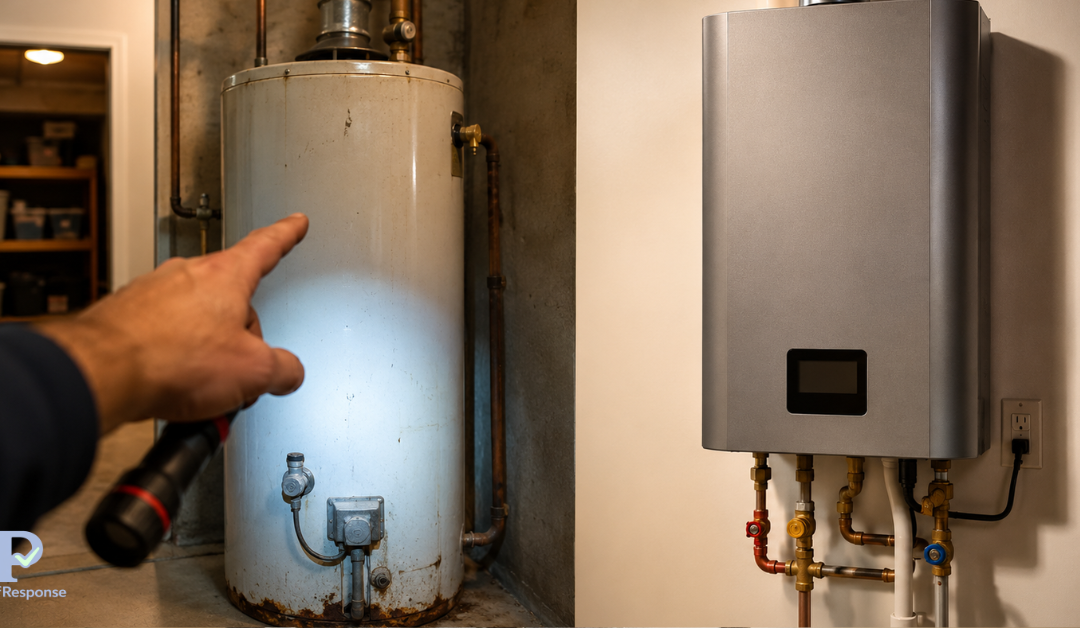
Tank water heaters are the big, cylindrical units you probably have in your basement or utility closet. On average, they last 8 to 12 years. Think of them like a family car. With regular maintenance and a little luck, some go well past 10 years. Others start giving you trouble around year 8, especially if the water in your area is hard (meaning it has high mineral content that builds up inside the tank over time).
Tankless water heaters are a different story. These compact units heat water on demand instead of storing it in a tank. They tend to last 20 years or more with proper care. That is almost double the lifespan of a traditional tank unit. The tradeoff is a higher upfront cost, but many homeowners find the long-term savings and reliability worth it.
So if you are weighing tank vs. tankless, lifespan alone gives a strong edge to the tankless option.
Warning Signs Your Water Heater Is Failing
Here is where things get practical. These are real signs that plumbers and service technicians see on calls every week.
- You are running out of hot water faster than usual. This is one of the first signs something is off. If your morning shower used to last 15 minutes but now the water goes cold after five, your heating element or the tank itself may be wearing out.
- You hear strange noises. Popping, rumbling, or banging sounds coming from your water heater are usually caused by sediment buildup at the bottom of the tank. Over time, minerals from the water settle and harden, forcing the heater to work harder just to heat the water above them. It is like trying to boil water in a pot with a thick crust on the bottom.
- You notice rusty or discolored water. If your hot water comes out with a reddish or brownish tint, it is often a sign that the tank’s interior is corroding. Once corrosion sets in, replacement is usually the smarter call over repair.
- There is water pooling around the unit. Even a small leak near the base of your water heater is a red flag. It could mean the tank has developed a crack or the pressure relief valve is failing. Either way, do not ignore it.
- Your energy bills are quietly creeping up. An aging water heater has to work harder to do its job, and that shows up on your utility bill. If your usage habits have not changed but your bills have gone up, your water heater might be the culprit.
Should You Repair It or Replace It?
Here is a simple rule of thumb that plumbers often use: if your water heater is more than half its expected age and the repair cost is more than half the price of a new unit, it is usually better to replace it.
For example, if your 9-year-old tank heater needs a $400 repair and a new unit costs $700, you are better off putting that money toward something new. You get a fresh warranty, better energy efficiency, and peace of mind.
On the other hand, if your unit is only 4 years old and just needs a new thermostat, a repair makes total sense.
The Bottom Line
So, how long does a water heater last? Tank models give you roughly 8 to 12 years, while tankless units can run strong for 20 years or more. The key is knowing the warning signs before a small problem becomes a cold shower emergency or, worse, a flooded basement.
If your water heater is showing any of the signs above or is approaching the end of its expected lifespan, it is worth getting a professional to take a look at it sooner rather than later.
Whether your water heater is making strange noises, leaking, or simply past its prime, the right call is getting a professional to look at it before it fails. The team at Proof Response offers dependable Emergency Plumbing Services to help you diagnose, repair, or replace your unit quickly so your home is never left without hot water.