
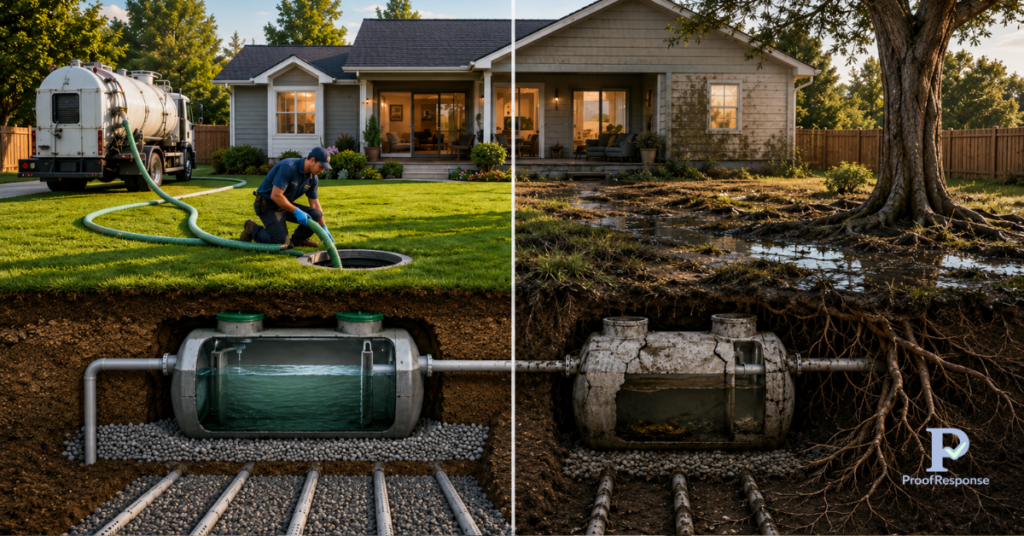
If you own a home with a septic system, you have probably wondered at some point: how long does a septic tank last, really? It is a fair question, especially when you consider that replacing one can cost anywhere from $5,000 to $15,000 or more. The good news is that with the right care, your septic tank can serve you well for decades.
Did you know that repairing or replacing a septic tank typically costs between $5,000 and $15,000, while the national average for a full installation sits at around $8,027.
The Short Answer: It Depends on the Material
Not all septic tanks are built the same. The material your tank is made from plays a huge role in how long it lasts.
Concrete tanks are the most common, and for good reason. They typically last 40 years or more. Think of them like the concrete sidewalk in front of your house. With basic upkeep, they hold up for a very long time. That said, they can crack over the years, especially if the soil shifts or tree roots get too close.
Plastic and fiberglass tanks are lighter and resistant to cracking. They generally last 30 to 40 years. They will not rust or corrode, but they can shift in the ground if not installed properly, which causes problems down the line.
Steel tanks are the oldest type and the least durable. They typically last only 20 to 30 years before rust becomes a serious issue. If your home was built before the 1980s and has never had the tank replaced, there is a reasonable chance it is a steel tank reaching the end of its life.
What Actually Makes a Septic Tank Wear Out Faster?
Here is where things get interesting. The material matters, but how you treat your system matters just as much.
- Pumping schedule: Your tank needs to be pumped every 3 to 5 years. Skipping this is like never changing the oil in your car. Sludge builds up, backs up into the drain field, and suddenly you have a much bigger problem than a simple pump-out.
- What goes down the drain: Flushing wipes (even the ones labeled “flushable”), medications, grease, or harsh chemicals kills the bacteria inside your tank. Those bacteria are what break down waste. Without them, your system fails faster.
- Water usage habits: Dumping hundreds of gallons into your system in a single day, say, doing eight loads of laundry back to back, overwhelms the tank. Spread out your water use throughout the week.
- Tree roots: A beautiful oak tree planted years ago might now be sending roots directly toward your tank or drain field. Roots are surprisingly strong and can crack concrete or clog pipes entirely.
Red Flags That Inspectors Find Again and Again
Real septic inspections reveal the same warning signs over and over. If you notice any of these, do not wait.
- Slow drains throughout the house are one of the first signs that something is wrong. Not just one sink, but multiple drains moving slowly at once.
- Wet or unusually green patches in the yard right above where the tank or drain field sits can mean the system is leaking or saturated.
- Sewage odors outside or inside the home are never normal and should be taken seriously immediately.
- Gurgling sounds in your pipes after flushing or draining signal that air and waste are not moving through the system the way they should.
During inspections, professionals also look for cracked baffles (the plastic or concrete parts inside the tank that direct flow), tank lid damage, and signs of drain field failure. These are not cosmetic issues. They are structural ones that affect the whole system.
How to Extend the Life of Your Septic Tank
The best thing you can do is treat your septic system like a living part of your home, because it basically is.
Schedule regular pump-outs every three to five years. Keep a maintenance log so you always know when it was last serviced. Be mindful of what goes down your drains. Plant shrubs or grass over your drain field, not trees. And if you ever notice a warning sign, call a professional right away instead of hoping it resolves itself.
The Bottom Line
So, how long does a septic tank last? A concrete or fiberglass tank that is well maintained can easily reach 40 years or more. A neglected steel tank might fail in half that time. The difference almost always comes down to the habits of the people living in the home.
Not sure how much life your septic system has left? Proof Response makes it easy to find out. Book a septic inspection and get a clear picture of your system’s condition before a small issue becomes a costly repair. And if your tank is already showing warning signs, their septic repair and troubleshooting team is ready to help.
A little attention today saves a very expensive headache tomorrow.