If you’ve ever stood in your basement staring at your old furnace and wondered whether there’s a better way to heat your home, you’re not alone. Across Canada, homeowners are asking the same question: should I stick with what I know, or is it time to make the switch to a heat pump? To answer that, it helps to understand how a heat pump works and whether it can actually hold up when the temperature drops to -20°C or colder. Spoiler: the answer might surprise you.
The Canadian Climate Institute projects heat pumps will account for 11% of all home heating systems by 2030 and potentially 28 to 68% by 2050.
How a Heat Pump Works
Think of a heat pump like a refrigerator running in reverse. Instead of pushing heat out of a cold space, it pulls heat from the outside air and moves it into your home. Even in very cold air, there is still some heat energy to extract. A heat pump captures it, concentrates it, and delivers it indoors.
That’s the core of how a heat pump works: it moves heat rather than generating it by burning fuel. This process is what makes heat pumps so efficient.
The Cold Climate Question: Can Heat Pumps Handle Canadian Winters?
This is the big one. For years, heat pumps had a reputation for struggling once temperatures dipped below freezing. That’s no longer the full story.
Modern cold-climate heat pumps, sometimes called CCHPs, are specifically designed for places like Ontario, Alberta, and Quebec. Many models now operate efficiently down to -25°C or even -30°C. Brands like Mitsubishi, Bosch, and Daikin have published real-world performance data showing strong heating output even at extreme temperatures.
A homeowner in Ottawa, for example, might run a cold-climate heat pump all winter long with very little backup heat needed. The technology has genuinely caught up to the Canadian climate.
Furnace Performance: Reliable, but Costly to Run
A gas furnace is the workhorse most Canadian homeowners already know. It burns natural gas to produce heat, and it does so quickly and reliably. In the depths of a January cold snap, a furnace will blast warm air through your home without hesitation.
The challenge is cost. Natural gas prices have climbed over the past few years, and a furnace that relies entirely on combustion is less efficient than a heat pump on a dollar-per-unit-of-heat basis. It also produces greenhouse gas emissions, which matters more and more for homeowners thinking about the long term.
The Hybrid System: The Best of Both Worlds
Here’s where things get interesting. You do not have to choose one or the other.
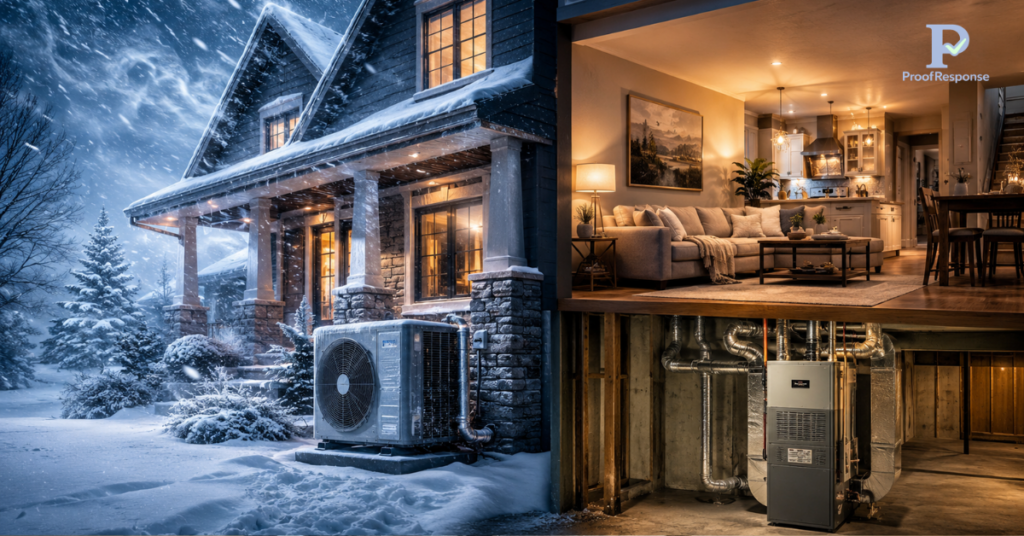
A hybrid heating system pairs a heat pump with a gas furnace. The heat pump handles the heavy lifting during milder winter days, running efficiently and keeping your energy bills low. When temperatures plunge below the heat pump’s optimal range, the furnace kicks in automatically to pick up the slack.
This setup is increasingly popular in Canadian provinces with wide temperature swings. You get the efficiency of a heat pump for most of the year and the raw power of a furnace when you really need it. Many HVAC professionals consider the hybrid approach the most practical choice for homes in colder climates.
Cost of Ownership: Heat Pump vs. Furnace Over Time
Upfront, a heat pump typically costs more to install than a furnace. A quality cold-climate heat pump system can run anywhere from $4,000 to $10,000 installed, depending on your home’s size and existing ductwork. A gas furnace replacement often falls in the $3,000 to $6,000 range.
But the real comparison is what you pay over 10 to 15 years. Heat pumps generally cost significantly less to run month to month because they move energy rather than burn it. Studies from Natural Resources Canada suggest that switching from a gas furnace to a heat pump can cut heating costs by 30 to 50 percent annually in many parts of the country.
There are also federal and provincial rebates available right now for heat pump installations, including through the Canada Greener Homes Grant. These incentives can reduce your upfront investment by $2,000 to $5,000 or more, depending on where you live.
So Which One Is Right for You?
There is no single right answer, but here is a simple way to think about it.
If you live in a milder Canadian city like Vancouver or Victoria, a standalone heat pump is very likely your best and most cost-effective option. If you are in a colder region like Winnipeg or northern Ontario, a cold-climate heat pump or a hybrid system will serve you better than either option alone. If your home already has a newer furnace that has years of life left in it, adding a heat pump to create a hybrid setup may be the smartest move right now.
Understanding how a heat pump works is the first step. The second step is getting an honest, site-specific assessment of your home.
Ready to Make the Right Call for Your Home?
No heating system is completely immune to a Canadian winter. Whether your furnace gives out during a cold snap or your heat pump needs emergency attention at midnight, having a response team on call makes all the difference. At Proof Response, our HVAC emergency services are available 24/7 across Canada so you are never left without heat when temperatures drop. And if winter takes a toll on more than just your heating system, our team also handles basement leaks after snow melt before they turn into costly water damage. One call covers it all.