
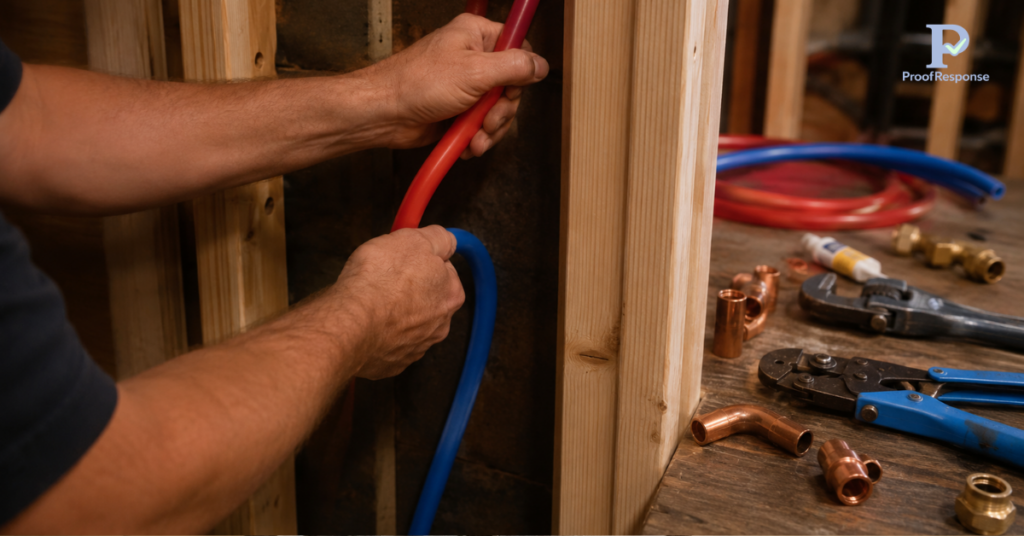
If you have ever started a plumbing project and found yourself staring at a wall of pipe options at the hardware store, you are not alone. One type keeps coming up in conversations with plumbers, contractors, and DIY homeowners alike: PEX. So, what is PEX plumbing, exactly? And why does it seem like everyone is talking about it?
PEX stands for cross-linked polyethylene. It is a flexible plastic tubing that has become one of the most popular choices for water supply lines in homes across North America. Whether you are repiping an old house, finishing a basement, or fixing a burst pipe after a cold winter, understanding what PEX plumbing is can save you time, money, and a whole lot of headaches.
Over 1.2 billion meters of PEX piping have been installed globally as of 2025, and PEX now represents 48% of newly constructed residential plumbing installations.
How Does PEX Plumbing Actually Work?
Think of PEX like a garden hose, but built for the inside of your walls. It is made from a type of plastic that has been chemically treated to make it stronger, more flexible, and able to handle both hot and cold water without breaking down over time.
PEX tubing comes in three main types: PEX-A, PEX-B, and PEX-C. The differences come down to how the plastic is cross-linked during manufacturing. PEX-A is the most flexible and easiest to work with. PEX-B is the most common and budget-friendly. PEX-C is less flexible but still reliable. For most home plumbing jobs, PEX-A or PEX-B will do the job just fine.
The tubing connects using fittings and a crimping or expansion tool. Once it is in place, water flows through it just like it would through any other pipe. No soldering, no open flames, and no need for a plumbing license in many jurisdictions for basic installations.
PEX vs. Copper vs. CPVC: Which One Wins?
This is the comparison most homeowners want to see. Each material has its place, but they are not created equal.
Copper: The Old Reliable
Copper has been the go-to pipe material for decades, and for good reason. It is durable, resistant to bacteria, and can last 50 years or more. But here is the catch: it is expensive. Copper prices have skyrocketed in recent years, and the installation process requires soldering, which means you need a skilled hand and the right tools. If a pipe freezes and bursts, copper cracks and needs to be replaced. It does not forgive the cold.
CPVC: The Middle Ground
CPVC (chlorinated polyvinyl chloride) is a plastic pipe that handles hot water well and costs less than copper. It glues together with solvent cement, which makes installation easier than soldering. The downside? It is rigid, meaning it can crack under pressure or temperature swings. In cold climates, CPVC can become brittle over time. It also does not bend around corners, so you need more fittings and more potential leak points.
PEX: The Flexible New Standard
PEX wins on flexibility, cost, and ease of installation. A single length of PEX can snake through walls, around corners, and across floors without needing a fitting at every turn. That means fewer joints and fewer chances for a leak. It also has a unique ability to expand and contract without cracking, so if a pipe freezes, it is far less likely to burst than copper or CPVC. The material itself costs significantly less than copper, and because installation is faster, labor costs drop too.
One real-world example: a contractor repiping a two-story home replaced all the copper lines with PEX in a single day. The same job with copper would have taken three days and cost nearly twice as much. That is the kind of difference that makes PEX hard to ignore.
The Honest Pros and Cons of PEX Plumbing
Where PEX shines
- Affordable upfront and over time. PEX tubing costs a fraction of copper and installs faster, which lowers both material and labor costs.
- Freeze-resistant. PEX can expand slightly when water freezes inside it, which reduces the risk of a burst pipe during cold snaps. This is a big deal in northern climates.
- Easy to install. No soldering or gluing required. A basic crimp or clamp connection is all it takes, making it a realistic DIY option for handy homeowners.
- Quiet operation. PEX absorbs sound better than rigid pipes, so you will hear less water noise through your walls.
Where PEX falls short
- Not for outdoor use. UV light degrades PEX quickly. You should not use it in exposed outdoor areas or anywhere sunlight can reach it directly.
- Not compatible with all water types. In areas with highly chlorinated water, some types of PEX can break down over time. Always check local water quality before choosing your pipe type.
- Cannot be recycled easily. Unlike copper, PEX is not easy to recycle, which is worth considering if sustainability matters to you.
When Should You Actually Use PEX Plumbing?
PEX is a great fit for most residential plumbing situations. It works well for new construction, bathroom and kitchen remodels, basement finishes, and full house repipes. If you live in a cold climate and have ever dealt with frozen pipes, switching to PEX could be one of the smartest upgrades you make.
It is also a strong choice when you are dealing with a water damage repair or emergency repipe. Because it installs quickly and requires fewer fittings, a plumber can get your water back on faster compared to copper or CPVC.
Final Thoughts: Is PEX Plumbing Right for You?
So, what is PEX plumbing in a nutshell? It is a flexible, affordable, and freeze-resistant pipe that has quietly become the preferred choice for plumbers and homeowners across the country. When you compare it to copper and CPVC, it stands out for its ease of installation, lower cost, and long-term reliability in most home environments.
Whether you are dealing with a plumbing emergency, planning a renovation, or just trying to future-proof your home, PEX is worth a serious look. And if you are not sure where to start or need a professional to handle the job right, the team at Proof Response is ready to help. If a pipe failure has already caused damage to your home, Proof Response can help you navigate the water damage claim process so you are not left dealing with insurers alone.