
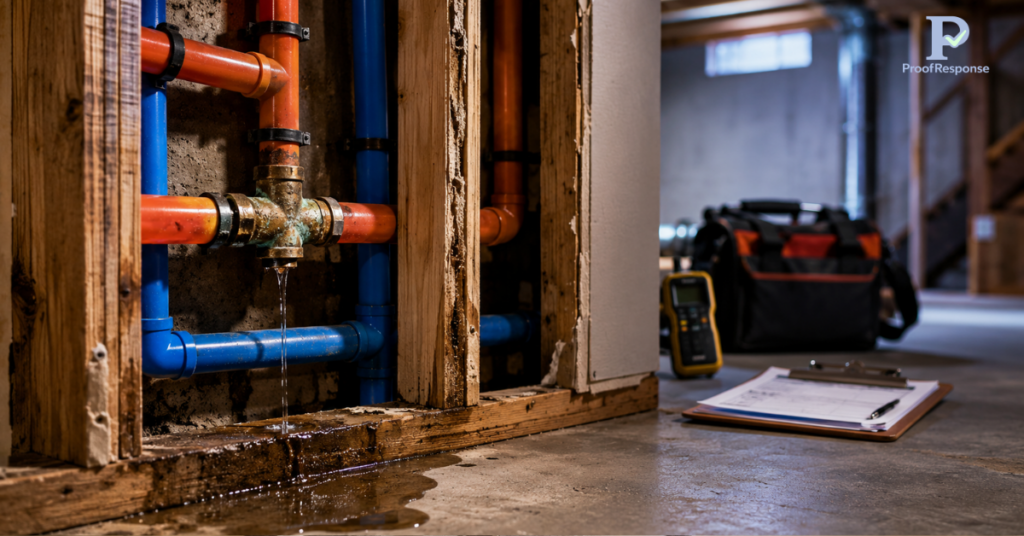
If you have ever walked into a basement or crawl space and spotted orange or blue plastic pipes snaking along the ceiling, you might have been looking at Kitec plumbing without even knowing it. So what is Kitec plumbing, exactly? It is a type of piping system that was popular in homes and condos built between the mid-1990s and around 2007.
It looked like a smart, modern alternative to copper at the time. These days, plumbers, home inspectors, and insurance companies treat it as a red flag. In this post, we will walk through what Kitec plumbing actually is, the real failures homeowners have reported, why insurance companies get nervous about it, and what it costs to replace.
Several Canadian insurance and plumbing sources estimate Kitec replacement costs commonly in the range of $5,000 to $15,000+, depending on property size, access, the amount of piping, labour rates, and repair work needed after walls or ceilings are opened. Larger homes or more complex buildings can cost more.
What is Kitec plumbing, and why was it used so widely?
Kitec plumbing is made from a composite material, basically a layer of plastic wrapped around a thin sheet of aluminum, with brass fittings connecting the sections. Builders loved it because it was cheaper and faster to install than copper. No soldering, no torches, just snap it together and move on.
For a while, it worked fine. The problem showed up years later, when the brass fittings started corroding from the inside. Imagine a garden hose connector that slowly rusts shut while you are not looking. That is essentially what happens here, except it is hidden behind your drywall.
Real failures homeowners have reported
This is not just a theoretical risk. Homeowners and plumbers across Canada and the United States have shared stories of fittings that gave out with almost no warning. One common pattern looks like this: a slow drip behind a wall for months, then a sudden burst that floods a kitchen or basement overnight. By the time anyone notices the water stain on the ceiling, the damage underneath is already extensive.
Plumbers who deal with Kitec regularly describe the brass fittings as almost like a ticking clock. They might hold up fine for fifteen years, then fail all at once because the metal has been dezincifying, which is a fancy way of saying the zinc inside the brass leaches out and leaves the fitting brittle and weak. Once that happens, it does not take much pressure to crack it open.
Why insurance companies are wary of Kitec
Here is where things get frustrating for homeowners. Many home insurance providers ask directly what kind of plumbing a house has, and if it turns out to be Kitec, some companies may refuse to insure the property at all. Others will still offer a policy, but only with conditions attached.
A common outcome is a higher deductible specifically for water damage claims. So even if your policy technically covers a burst pipe, you might be on the hook for a much larger chunk of the repair bill before insurance kicks in. Insurance providers may also limit your coverage options simply because plumbing is considered a higher risk for leaks and water damage.
There is also a trust issue at play. Insurance applications generally require you to disclose Kitec plumbing if you know it is there, and not doing so can be treated as grounds to void the policy entirely. That means honesty here is not optional. It is the difference between having real coverage and finding out the hard way that you do not.
Homeowners who have filed multiple claims for Kitec related leaks have also run into a different kind of trouble. After several claims, some insurers have informally signaled they may decline to renew the policy, and premiums tend to climb steadily with each new claim. It becomes a cycle. The pipes fail, you file a claim, your premium goes up, and your insurer gets twitchier about keeping you on as a customer.
What replacement actually involves
Replacing Kitec plumbing means a licensed plumber removes the old composite pipes and brass fittings and installs new piping, usually PEX, which has a much better track record. This typically means tearing into drywall to access the pipes, running new lines, and then patching and repairing the walls afterward.
It is invasive, no question. But it is also the kind of project that pays for itself in peace of mind. Once the Kitec system is fully replaced, the higher deductible some insurers apply specifically because of Kitec usually goes away, which can make a real difference in your monthly premium and your exposure if something does go wrong down the road.
What does it cost?
Costs vary depending on the size of your home and how the pipes were originally routed. For a condo, replacement tends to fall somewhere between 5 thousand and 15 thousand dollars, while a larger home can run past 25 thousand dollars once you factor in the plumbing work and the drywall repairs that come with it. It is a real expense, but compare that to the cost of an unexpected flood, the mold remediation, the flooring, the furniture, and the insurance headaches that follow. For a lot of homeowners, replacement starts to look less like an optional upgrade and more like an insurance policy of its own.
The bottom line on Kitec plumbing
So, what is Kitec plumbing in plain terms? It is outdated piping that quietly raises your risk of flooding and complicates your insurance coverage, often without you realizing it until something goes wrong. If your home was built in the late 1990s to mid 2000s window, it is worth checking your pipes, or having a plumber take a look, before a small drip turns into a five-figure repair bill.
If you are dealing with a Kitec-related leak, an insurance denial, or you are not sure how to move forward with a claim, talking to someone who handles these situations regularly can save you a lot of stress. Get in touch with ProofResponse to talk through your options and figure out the right next step for your home.