Protect and assess the property
Describe active water, affected areas and the immediate service requirement.
General preparedness guidance — not a live weather alert.
PROPERTY GUIDANCE // Keep valuables and business stock away from areas vulnerable to water. · Canada.ca
Scrolling automatically.

When damage and insurance questions arrive together, start with the active property need, the facts already known and the information being requested.
A real person can discuss the property, the service and your next step, 24/7/365.
Describe active water, affected areas and the immediate service requirement.
Retain dates, observed conditions, available photos, work details and the contacts involved.
Identify whether the question concerns the cause assessment, work authorization, documentation or the insurer’s review.
Explain where the water appeared, when it started and what changed. The cause assessment and policy decision may require different people and evidence.
ProofResponse can discuss the property-service records and relevant billing coordination. Coverage, claim acceptance and payment decisions remain with the policyholder and insurer.
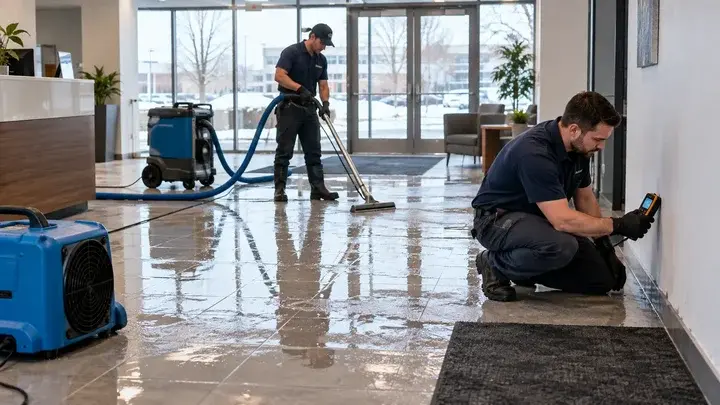
Water removal, drying and recovery coordination for burst pipes, appliance leaks and water entering occupied rooms. Call with the affected address while the problem is active.
ExploreGet standing water assessed, organize extraction and identify the materials that need drying after a flood. The initial mitigation scope comes before repair or rebuild decisions.
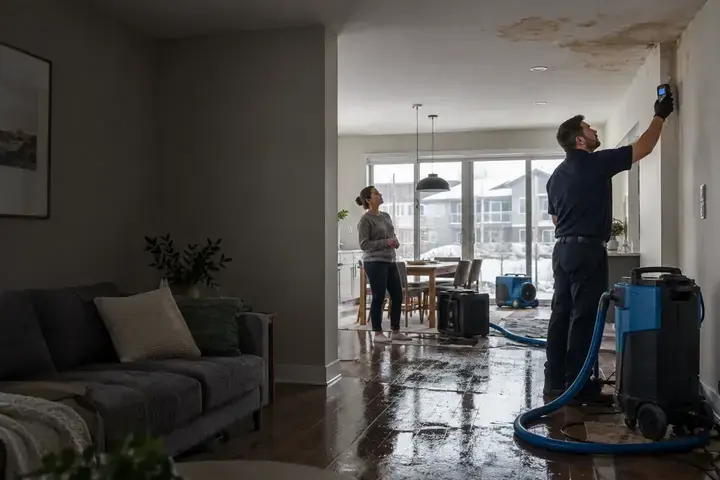
ExploreLocate and document suspected moisture behind a stain, recurring damp patch or previous leak. A focused assessment helps determine where further investigation or drying belongs.
ExploreNo. This pathway helps discuss property response and records. Coverage and claim decisions depend on the applicable policy, facts and insurer review.
Yes. Begin with the property location, active condition and contact information. Add the claim reference when it is available.
Describe the property problem and ask the insurer about the applicable policy and next steps. Any work being considered still needs clear authorization and an understanding of who pays if all or part of the scope is not covered.
Keep a dated sequence of observations, contact details, claim reference, written instructions, approved scopes and invoices. Store originals and distinguish what you observed from what a specialist later assessed.
Identify who is authorized to receive the information and what each person needs. Agree the contacts, records and communication route with the responsible team so updates support the work without circulating unnecessary personal details.